
A Mississippi Genealogy & History Collection
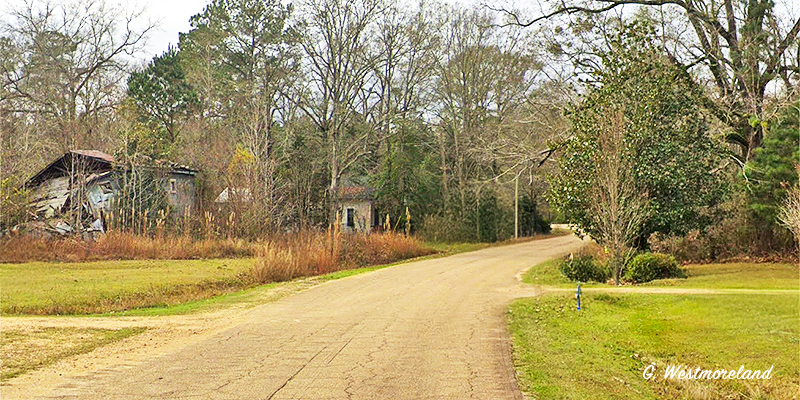
Rockport is a small, unincorporated community in eastern Copiah County, Mississippi, just west of the Pearl River—close enough to the river that transportation shaped nearly everything about the place.
Long before “Rockport” appeared on maps, the area was part of a much older Indigenous landscape. Archaeological finds reported near Rockport—items like pottery and copper beads, along with evidence of mounds and burials—point to pre-American settlement and activity in the region.
A key early landmark that anchors Rockport’s story is Galilee Baptist Church. The church community was established west of the later town site in the early 1800s (commonly cited as 1825), and it remains one of the most visible surviving historic features tied to Rockport’s earliest era.
Rockport itself is typically dated to 1849, during a period when Copiah County communities were growing around river landings, roads, and—most importantly—railroad plans. Mississippi’s first major north–south rail connection, the New Orleans, Jackson & Great Northern, was completed through much of the state by 1858, linking New Orleans to Canton and helping push commerce inland. Local accounts describe Rockport as a “railway town” during the boom years, with amenities you’d expect in a lively stop—stores, a hotel, a Masonic lodge, and a church—built around the promise of regular movement of people and goods.
The Civil War period touched Rockport directly. A Confederate company organized there in July 1861—remembered by the nickname “Rockport Steel Blades”—and later served as part of the 6th Mississippi Infantry. The Pearl River remained central to local life after the war as well; in 1870, state lawmakers even considered establishing a ferry crossing at Rockport, reflecting the community’s ongoing role as a natural transit point near the river.
For a full century, the post office helped keep Rockport on the map—operating (as commonly reported) from 1856 to 1956. That long run matters for family history: post office records, postal routes, and mail contracts often mirror population shifts and can hint at when a place was thriving versus simply hanging on.
By the early 1900s, Rockport’s rail identity reappeared in a more formal way. Sources note that the New Orleans, Jackson & Great Northern line ran through Rockport and that Rockport served as a “flag stop” (trains would stop on signal rather than by default); this is often dated to 1909 in community summaries.
But by the late 1930s, descriptions of Rockport shrink to the basics—just a small store, a gas station, a post office, and a church—an unmistakable sign that the town’s earlier commercial pulse had faded.
Today, Rockport is sometimes described as a “lost town”: a place whose name persists while most of the dense settlement pattern is gone. Writers who’ve visited emphasize that Galilee Baptist Church still stands as one of the few tangible links to the original community, while the broader town footprint has largely returned to countryside. In other words, Rockport didn’t exactly “move away”—it just… politely stopped being a town.