A Mississippi Genealogy & History Collection
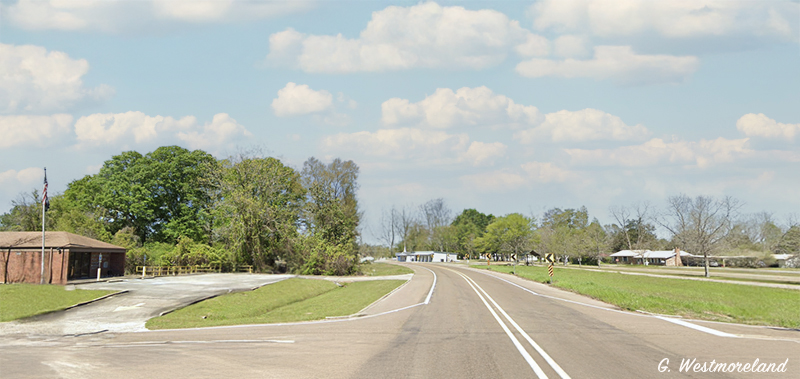
Carson, Mississippi—sometimes casually called “Carson City”—is an unincorporated community in Jefferson Davis County, tucked along Highway 42 about six miles southeast of Prentiss.
Before Jefferson Davis County was carved out in 1906, the area belonged to Covington County, meaning Carson’s earliest development predates the county that now contains it. The community’s emergence became official in 1900 when a post office opened under the name Carson, signaling that enough families, farms, and commerce existed to merit postal service. Like much of South Mississippi, the landscape was dominated by longleaf and yellow pine forests, and those woods would soon shape the town’s destiny.
Carson truly came to life in the early 1900s when the railroad arrived in 1902. With dependable rail access, the town quickly evolved into a Pine Belt timber center—complete with sawmills, lumber camps, and the constant movement of workers, trains, wagons, and freshly cut logs. By around 1910, Carson had roughly 200 residents and more economic activity than its size might suggest, including multiple general stores serving mill hands, farm families, and nearby rural settlements. The railroad depot became the community’s beating heart, moving timber out and needed supplies in. At its height, Carson offered everything required for daily life without needing to travel to a larger town.
As the 20th century unfolded, Carson followed the same pattern experienced by many Southern railroad-timber towns. Once the easily harvested pine forests thinned, the sawmills slowed, consolidated, or moved. Highways and trucking gradually replaced small-town rail depots, and regional shopping made local general stores less essential. Without incorporation or major industry, Carson’s population and commercial footprint naturally diminished. What remained—and still remains—is a quiet rural community shaped by churches, scattered homes, family land, and memories of the bustling mill era.
Today, Carson is small, unincorporated, and peaceful, but not forgotten. Its history still shows up in old railroad beds, stories of logging camps, surviving historic homes, and family connections stretching back more than a century. For genealogists and local historians, Carson offers fertile ground: post-1900 postal records, railroad employment lists, photographs of early sawmills, and census entries documenting timber-era families. Though the trains and mills are gone, the community’s character—rooted in pine, perseverance, and rural life—remains intact. Carson stands as a reminder that even the smallest dots on the map helped build Mississippi’s economic and cultural landscape, just at a quieter volume now.
Carson is located on State Highway 42 about 32 miles northwest of Hattiesburg.